
In urban, progressive areas, and in the media and institutions which identify as urban-progressive, gender is a regular topic. I find some of the discussion enlightening and a lot of it confusing.
I’ve tried to solve my confusion by finding fault with the messengers —a time-honored tradition when feeling like one is, but ought not be, confused.
That strategy hasn’t worked. It’s hard to be simultaneously critical and open to new understanding. (Trust me, I’ve tried.)
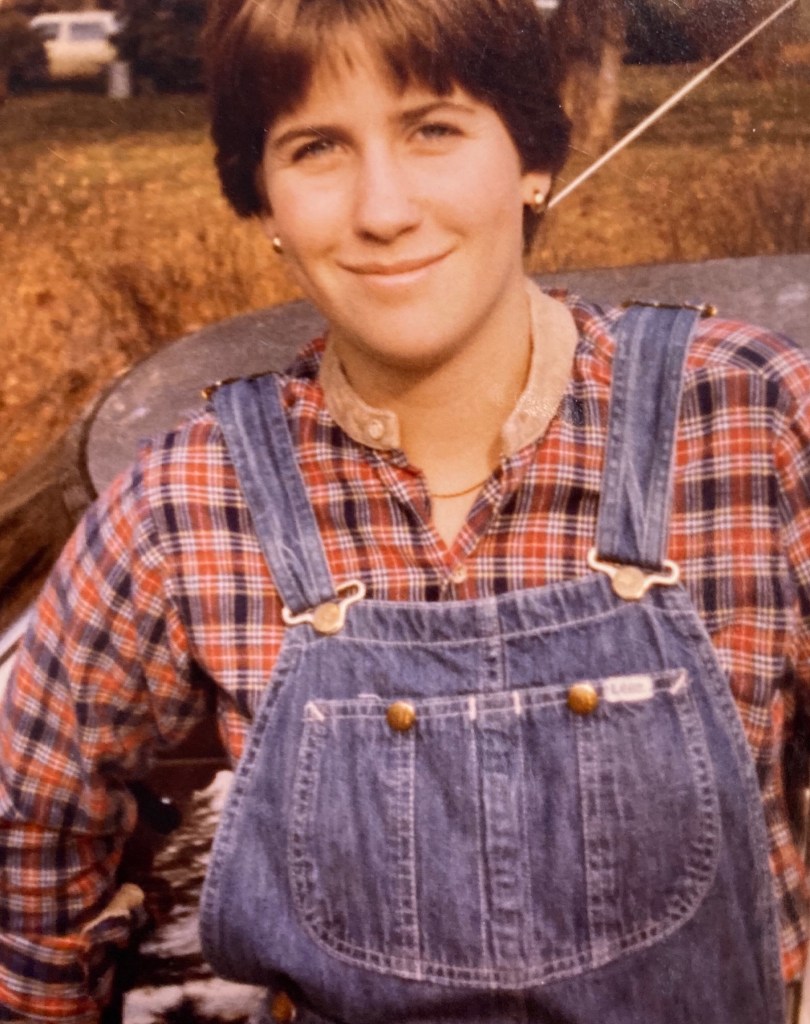
I’m a woman. I choose not to use the language, “I identify as a woman.” To me that language is flimsy, like I went into my closet and selected an identity off a hangar, and tomorrow or next year I might select a different one. It might be like that for some people. Gender is fluid for some. It isn’t for me.
I’m gay. I like the word “gay” better than “lesbian”. I’m starting to like “queer”, partly because it’s more of an insider term. I appreciate straight allies, but they need boundaries. I consider using the word, queer, as a boundary. As with woman, I say I am a gay, rather than I identify as gay.
The whole personal pronoun thing is an area of confusion / grumpiness for me. For those who are wondering why I could possibly be grumpy about pronouns, in some progressive locales, like Portland, individuals introduce themselves with their pronouns to describe their gender. “Hi, my name is Chelle. My preferred pronouns are she/her.” At a group gathering, I would write, “Chelle Hammer” on my name tag and “She/Her” underneath. In my email signature, I would put, She/Her, under my name.
You would then know I identify as female. If I said, my preferred pronouns are they/them, you could surmise that I don’t describe myself a strictly female or male. I might see myself as a blend of genders, or none of the above.
Well, you might think, so what? What’s it to me if someone identifies as something different than male or female? After all, I’m gay, and considered not normal and even evil by some, shouldn’t I be tolerant of others?
Yet, on so many levels, I find the entire personal pronoun announcement problematic.
- Personal pronouns are third person. Presumably someone would only refer to me in the third person, if I weren’t in the room, else I hope my name would be used. If I’m not in the room, I don’t care what people say, let alone which pronoun they use.
- Further, if having someone know how you understand your gender is so important that you state it with your name, why be so oblique? If you want to talk about your gender the moment you meet someone, talk about it. In the language of nouns and pronouns, you are the antecedent. Your name, noun, came first. Let the noun tell the story, not the trailing pronoun.
- It places an obligation on the listener regardless of relationship. In theory, if someone were to introduce themself to me with they/them, I would use those pronouns going forward, whether or not the person was present or known to my listener, in order to “honor their pronouns.”
- The English language has gendered singular pronouns and non-gendered plural pronouns. There is the gender-neutral, “it”, but since “it” more often refers to objects, “it” could come off as an insult. (I kind of like “it.” There is an element of “gender is not relevant to this story”, and “none of your business” to “it.” Also, “it” makes more sense grammatically.
- Using plural pronouns to describe an individual is grammatically confusing. If you recall, plural pronouns get a corresponding verb, so the whole sentence goes to heck when trying to talk about an individual who doesn’t want to claim only she or he, but an element of both, or neither. And the listener, using those sentence structure clues taught in elementary school, still doesn’t know how many people are coming to dinner.
- It lets straight people off the hook because their gender and sexuality are “normal.” Some straight allies include their personal pronouns on their name tags or in their signatures. The idea is that those who are “gender diverse” won’t feel like they stand out if straight people also identify their pronouns.
- Our church made including pronouns a strong suggestion on our most recent order of name tags. To me, it smacks of the fad of straight people in the UK and other places wearing safety pins, so gays would know they were “safe” people. How demeaning. We aren’t children. And, on the practical side, the only thing more fun for homophobes than kicking the shit out of a fag, would be kicking the shit out of a fag and their safety-pin wearing pansy ally. The tree you stand under during a lightening storm makes you more, not less, likely to be struck.
- This very nuanced and specific focus on slicing gender seems so counter to the feminism I grew up with and embrace which was about expanding and making room for a broader range of expression.
- It’s just weird. Why indicate gender immediately and publicly when we would not ask someone to put their sexuality, political party, religious preference, diet preferences or marital status on the same name tag?
When the personal pronoun option appears on a form, I ignore it. There’s usually an option labeled, “Prefer Not to Say.” That’s close, though it hints that I’m shy and don’t want to reveal myself. I’d like the option, “Nope.”

 The Hammer Times
Leave a comment