
One principle that delighted me about early Amazon, was its commitment to making knowledge democratic. Anyone, no matter their title, could ask anything of someone else, regardless of their title.
In the early days, when Amazon was small, the knowledge hierarchy was flat, and knowledge that was role-specific was taught.
The VP of Finance opened his All Hands meeting with, “Hi, I’m Russ Grandinetti. You might recognize my name, even if you can’t pronounce it, because I’m the guy who signs your paychecks.” (Cheering.) He then spent the next 30 minutes walking us through the financial information that had just been shared with Wall Street, explaining terms, trends and how to know what was eye-catching vs important.
That approach to knowledge – that it is open source, to be shared rather than hoarded to make one’s self more important isn’t everyone’s preference. Knowledge is powerful. If you are the only one that knows something, it can feel like job or status security. “They can’t get rid of me; I’m the only one who knows how to fix the boiler.”
Hoarding knowledge might work if knowledge stood still, but it doesn’t. Pretty soon both you and the boiler are obsolete.
A subset of making knowledge democratic is making it accessible. I work at a company now that publishes all kinds of information relevant to our jobs on an internal SharePoint, but good luck finding it eight clicks from the main page.
In contrast, the Norfolk city website makes me want to have them organize the world. It’s clear, organized and helpful.
You can look up any property and find information about municipal services for that address: trash, recycling, street sweeping, closest park and the closest library:

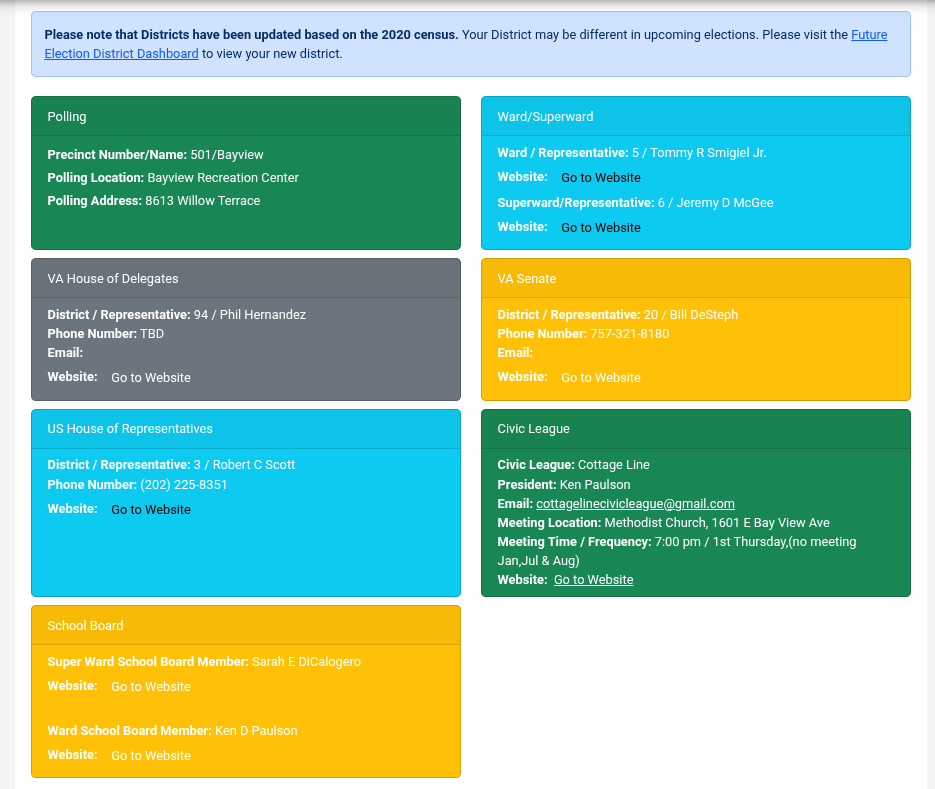
Simply scroll down to find your elected representatives:
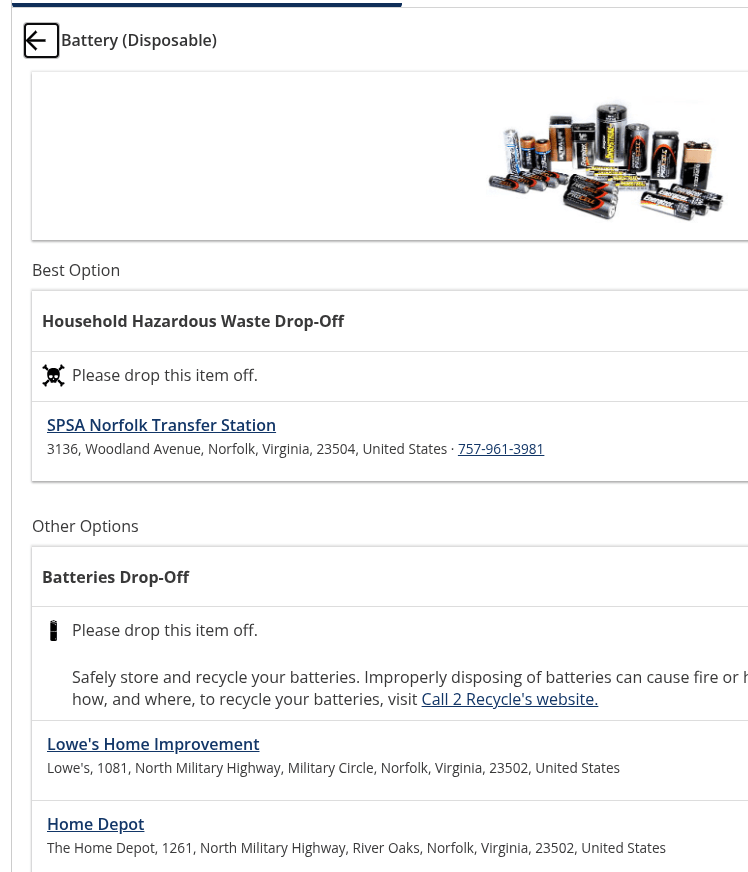
It even has a Waste Wizard so you can learn what should be recycled and what should go in the trash. Recycling disposable batteries? Here’s the information:
This is how information flow should work. We (the presenters) know stuff that would help you, therefore, we will publish it in a way that’s accessible, unbiased and free.
I’m now on the hunt for more AUF (accessible, unbiased and free) knowledge.
 The Hammer Times
Leave a comment